Most advice about water heaters assumes the house is on town water, with steady pressure from the street. Alma homes run on their own wells, so the water comes from a pump and a pressure tank. That changes the advice, especially for tankless heaters. This guide covers what you can check yourself, how to weigh tank against tankless for your house, and how to tell whether an older heater should be repaired or replaced.
Start with what you can safely check today
You don't need tools or any special knowledge for these, and none of them involve opening the heater.
- Read the label on the side of the heater. It gives the fuel type (electric, natural gas or propane), the tank size and a serial number, and the serial number usually includes the date the heater was made. Write these down. A plumber will ask for them.
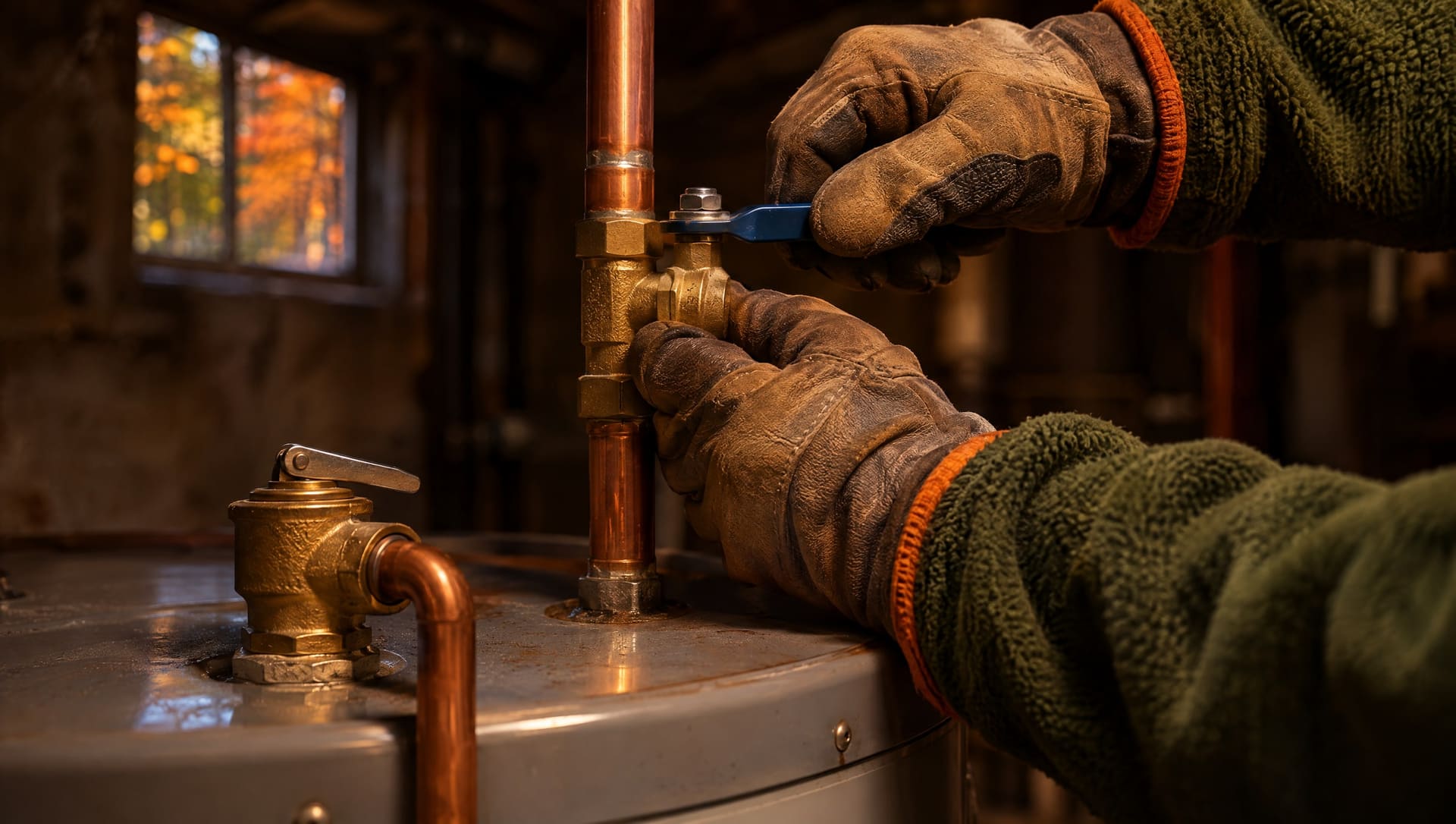
- Look at the floor around the base and at the pipe that runs down from the relief valve on the side or top. A dry floor is good. Damp at the base or a steady drip from that pipe is worth mentioning when you call.
- Run the hot water at the tub for a minute and hold a kitchen thermometer under it. Ontario's Building Code (Part 7, Article 7.2.10.7.) limits water from a shower head or into a bathtub to 49 °C. If your reading is well above that, turn down the heater's dial a little on an electric unit, or leave a gas unit for a plumber to adjust.
- On a gas heater that smells of gas, don't touch the controls. Leave the house and call your gas or propane supplier from outside.
If the heater has stopped working completely, turning it off is safe. Switch off the breaker for an electric heater. On a gas heater, turn the control knob to the pilot or off setting. Then leave it until someone can look at it.
Why a well changes the tank or tankless question
A tank heater keeps a store of hot water ready to use. A tankless heater only heats water as it passes through, and it needs a steady minimum flow before it fires, which is why a well makes a difference.
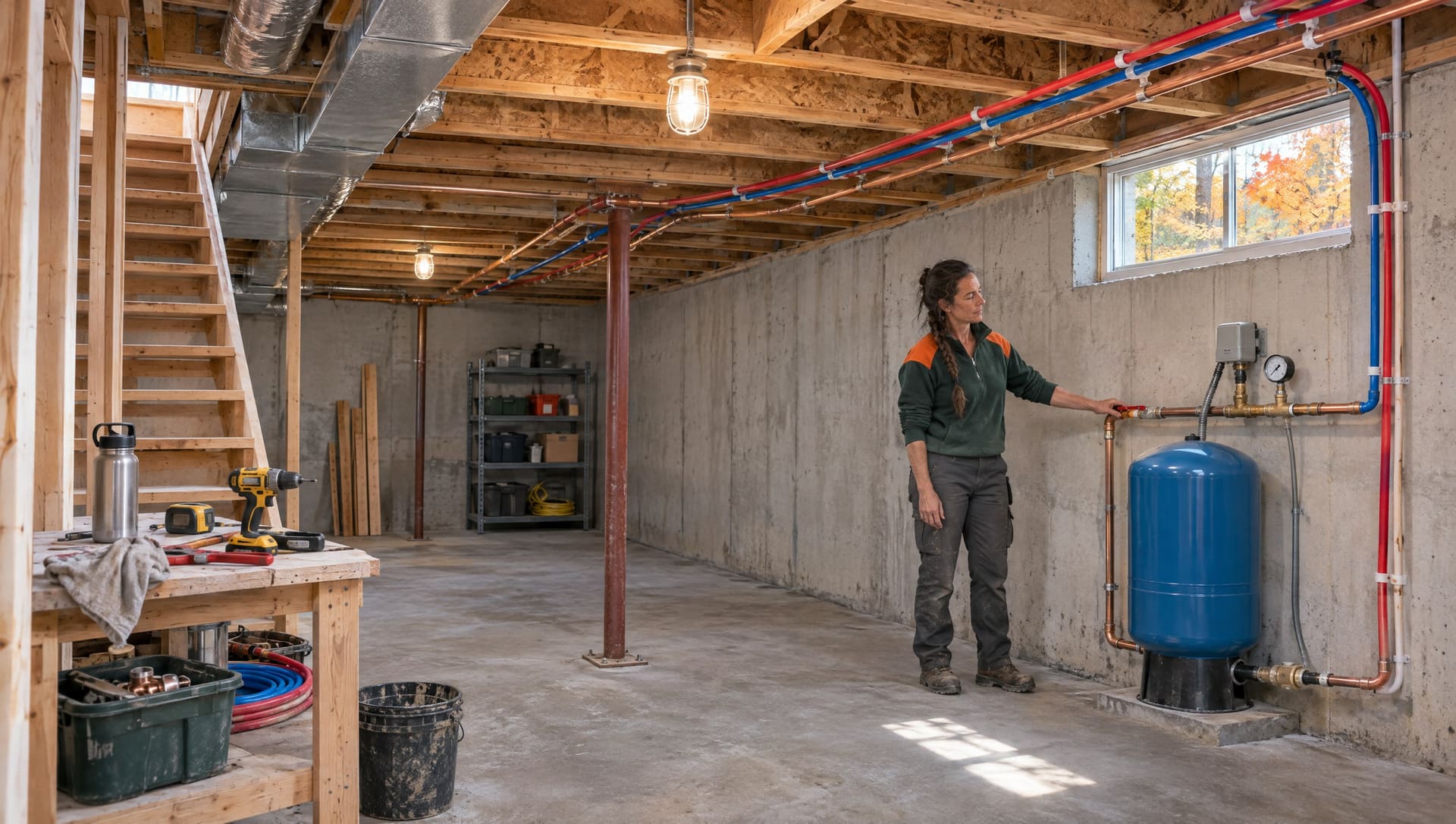
Your pressure tank lets the pressure fall to a set point, the pump kicks in, and the pressure climbs again. A tank heater barely notices this cycle. A tankless heater can, because a small drop in flow or pressure at the wrong moment can give you a cold burst in the middle of a shower. Most well systems can be set up so this isn't a problem, but the pressure switch, the pressure tank and the pump all have to be in good shape. If your pressure tank is waterlogged or the pump short-cycles, fix that first. Otherwise a new tankless heater will get the blame for a well problem.
Your well also limits how much water the house can draw at one time. A tankless heater can supply hot water indefinitely, but only up to its flow rating, and that doesn't help if the pump can't keep up when two showers and the washer are running together. A tank heater handles short peaks well and then needs time to recover.
Winter matters more than people expect
Environment Canada's 1981 to 2010 normals for the Fergus Shand Dam station near Alma give a January mean daily temperature of −7.4 °C. Groundwater stays far warmer than the air, but the water reaching your heater in January is still cold. A tankless heater has to raise that cold water to a comfortable temperature as it flows through, so in deep winter the same unit delivers less hot water per minute than it does in summer. To size a tankless heater properly, a plumber works from your coldest incoming water, not an average.
Fuel and wiring often decide it
- Gas or propane tank heaters are the familiar choice in many rural houses. Fitting one is fairly simple if a venting route is already in place.
- Gas or propane tankless heaters need a gas line big enough for a high burner rating and their own venting. Sometimes that means new runs through the house.
- Electric tank heaters are simple and need no venting. They recover more slowly after heavy use.
- Electric whole-house tankless heaters draw a lot of current. Many older houses, including the 1850s to 1890s homes near Peel Street West and Church Street and the 1930s to 1950s houses along Wellington Road 7, may not have the electrical service for one without an upgrade.
In Ontario, gas appliances must be installed and serviced under Ontario Regulation 212/01. Gas work is performed by TSSA-certified gas technicians. New plumbing and changes to drains generally need a building permit, and the township's building department can tell you whether your particular job does.
What plumbers usually recommend on a well
There's no single answer, and anyone who gives one without seeing your house is guessing. This is how the decision often goes:
- A tank heater often suits a household with a few peak times a day, an older house with limited electrical service or awkward venting, or a well system that hasn't been checked in a while. It's forgiving of small pressure swings.
- A tankless heater can suit a household that runs out of hot water with a tank, a house with limited floor space, or people who want to stop heating stored water all day. It works best when the well, pump and pressure tank are sound and the gas supply or electrical service can carry it.
- A larger tank or a high-recovery tank is a middle option many people miss. For a family that runs out after the second shower, it may solve the problem with fewer changes to the house.
Two more points for a house on a well and septic. Hot water use goes into the septic system just like cold, so a bigger heater shouldn't encourage back-to-back laundry and baths on the same morning. Spread heavy loads out. And if your house already has water treatment equipment, the plumber should check where the heater sits in that line before choosing a model.
How long a water heater lasts, and when replacing is worth it
How long a heater lasts depends on the type, how hard it works and how well it has been looked after. The manufacturer's warranty term on the label is a fair guide to the life the maker expects. Tank heaters slowly collect sediment at the bottom, and with well water that can build up faster than people expect. Draining a little water from the tank now and then, following the manufacturer's instructions, helps slow it down. Tankless heaters need their heat exchanger flushed from time to time, and that's easy to forget.
A repair is usually worth it when the heater is fairly young, the fault is a part such as a heating element, thermostat, thermocouple or relief valve, and the tank itself is sound.
Replacement is usually the better choice when:
- the tank leaks from the body or the base, not from a fitting
- hot water comes out rusty while the cold runs clear
- the heater is near or past the life the manufacturer suggests and has started needing repairs
- the household has changed and the heater no longer keeps up
If you're not sure, a plumber can test the heater and tell you plainly whether a part will do or the tank has reached the end of its life. You'll see the price in writing before any work starts, whichever way you go.
What a plumber will look at
On a visit, expect the plumber to check the heater's age and condition, the relief valve and its discharge pipe, the venting on a gas unit, and the temperature at the tub. They'll also ask how many people live in the house and when the hot water runs short. On a well, a good plumber will look at the pressure tank and the pressure switch before recommending a tankless heater, because those decide whether it will work well in your house.
If you're weighing a new heater or the old one is showing its age, water heaters explains how Alma Plumber handles the visit.